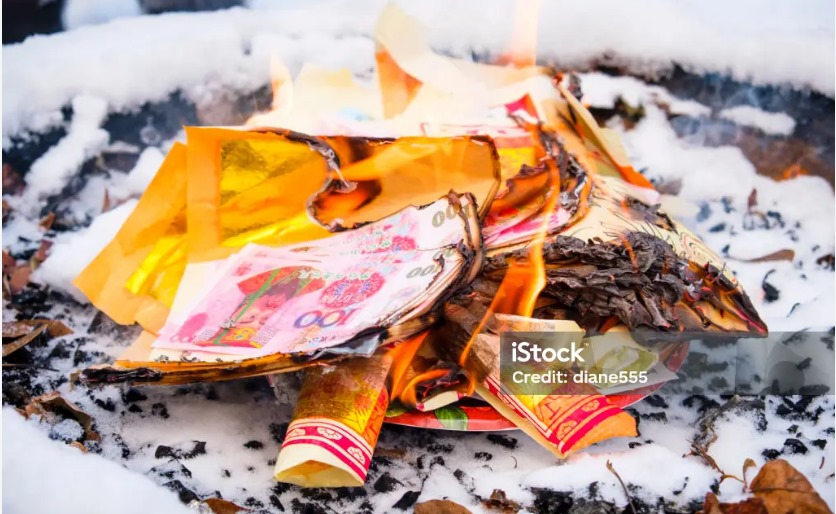
Joss paper, often called ghost money, is a key part of many cultural and religious ceremonies in East Asia, especially in countries like China, Taiwan, and Vietnam. It’s not just about burning paper; it’s about keeping the connection with ancestors alive and honoring the belief that life goes on after death. This tradition of burning joss paper reflects a long-standing practice of ensuring that loved ones are cared for, even in the afterlife.
Where Did It All Start?
The use of joss paper goes way back, thousands of years in fact. It has roots in ancient Chinese beliefs tied to Taoism and Buddhism. The idea behind it is that after death, spirits still need the things they had in life, like money and material goods. So, people burn joss paper as a way of sending these things to their loved ones in the afterlife, making sure they have everything they need.
Over time, joss paper has taken many forms—most commonly money, but also things like houses, clothes, cars, and even smartphones. The idea is simple: whatever we need in life, we probably need in the afterlife too. It’s a way to make sure the deceased are living comfortably, wherever they may be.
How Joss Paper Is Used in Ceremonies
Joss paper shows up in various ceremonies, with each one having its own special purpose. But the common thread is showing respect and care for those who have passed away.
- Funerals: When someone dies, their family burns joss paper as part of the funeral rituals. This ensures the deceased has a smooth journey to the afterlife and is well taken care of when they get there. It’s a way to show love and respect, and to make sure they have everything they need in the next life. It’s also an expression of filial piety—honoring and respecting one’s parents and ancestors is a deeply rooted value in many East Asian cultures.
- Qingming Festival (Tomb Sweeping Day): This is a day when families visit the graves of their ancestors, clean the tombs, and make offerings. Burning joss paper is one way to send “money” to the spirits, helping them live well in the afterlife. It’s also a reminder that ancestors are still an important part of the family, even if they’re no longer physically here.
- Hungry Ghost Festival: Celebrated in the seventh month of the lunar calendar, this festival is all about appeasing spirits who may be wandering the earth. The gates of the underworld are believed to open during this time, and some spirits can become restless or even cause trouble if they feel neglected. By burning joss paper, families offer the spirits food and money to keep them satisfied, ensuring they don’t bring misfortune.
What Does Joss Paper Really Symbolize?
At its core, burning joss paper is about making sure the spirit world is taken care of. Fire acts as a bridge between the living and the dead, turning the paper offerings into something the spirits can use. It’s a way for the living to continue providing for their ancestors, even after death.
In today’s world, the practice has evolved. Some people have shifted towards smaller, simpler offerings, especially in cities where space and environmental concerns come into play. Still, the meaning behind the tradition remains the same: it’s about love, respect, and keeping that connection alive.
More recently, some people have also started exploring eco-friendly ways to honor the dead, recognizing the environmental impact of burning large amounts of paper. Digital offerings or smaller, symbolic gestures are gaining popularity, but they still hold the same cultural significance.
Why Joss Paper Matters Today
Joss paper is more than just a ceremonial tradition—it’s a way for people to keep their ancestors close and to show that even in death, family bonds remain strong. It allows people to express their love and respect for those who came before them and to ensure their well-being in the afterlife.
Even as society changes and modernizes, the use of joss paper continues to be an important cultural practice. It’s not just about sending money or material goods to the dead—it’s about showing that you haven’t forgotten them and that you still care. For many people, it brings comfort, knowing that they’re helping their loved ones find peace and happiness, even in the next life.
In the end, the tradition of burning joss paper serves as a beautiful reminder of the enduring connection between the living and the dead. It’s a way to keep the memories of our ancestors alive and ensure that their spirits are never left wanting.
 Funeral Memorial
Leave a comment