In a small village in West Africa, nestled between the rolling hills and the ancient baobab trees, lived an elder named Mama Adisa. She was known throughout the region for her deep connection to the spirit world and her wisdom in guiding the community through rituals and ceremonies that honored their ancestors.
Mama Adisa had a powerful vision one night. In her dream, she was visited by an ancestor who spoke in a language that was foreign yet familiar, a tongue she had never heard but somehow understood. The ancestor, an old man with a long beard and a serene expression, handed her a piece of paper that shimmered like gold in the moonlight.
“This is a bridge between our worlds,” the ancestor whispered. “Burn this paper, and the smoke will carry your prayers and offerings directly to us. We have seen this used in distant lands, and it has great power.”
When Mama Adisa awoke, she was filled with a sense of urgency and purpose. She shared her vision with the villagers, who were intrigued but uncertain. They had always honored their ancestors with traditional offerings of food, drink, and incense. This new method seemed foreign, yet the elder’s wisdom was never to be questioned.
Mama Adisa, determined to fulfill the instructions from her dream, set out on a journey to the coastal city where traders from all over the world came to barter goods. Among the bustling markets filled with spices, fabrics, and curiosities, she found what she was looking for—a small shop run by an elderly Chinese man named Mr. Wong. The shelves were lined with bundles of golden and silver joss paper, their delicate surfaces shimmering in the dim light.
Mama Adisa explained her vision to Mr. Wong, who listened intently. He was touched by the elder’s story and shared the history of joss paper, explaining how it was used in Chinese culture to honor ancestors and send offerings to the spirit world. Although their traditions were different, Mr. Wong saw the deep similarities in their reverence for the departed.
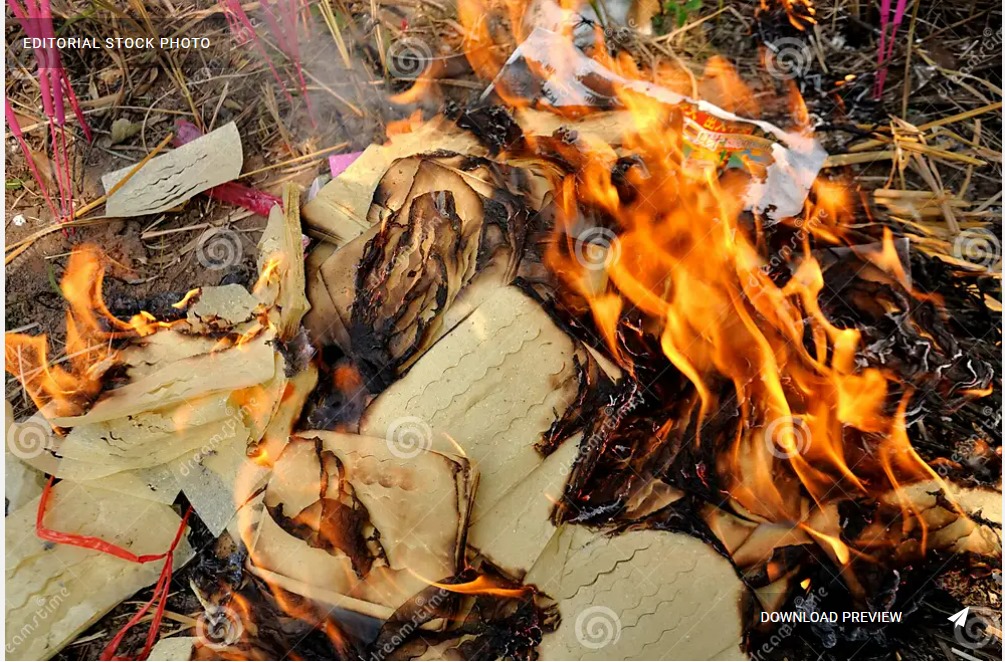
Mama Adisa purchased a large bundle of joss paper and returned to her village. She gathered the community and, with careful instruction, they performed their first ceremony using the golden paper. As the flames consumed the joss paper, the villagers watched in awe as the smoke spiraled upwards, carrying with it their prayers, hopes, and gratitude to the ancestors.
From that day forward, joss paper became an integral part of the village’s rituals. They blended it with their traditional practices, creating a unique ceremony that honored both their African heritage and the new wisdom brought to them through Mama Adisa’s vision. The village prospered, and stories of the powerful offerings spread far and wide.
Generations later, Mama Adisa’s descendants still tell the story of the golden paper and the ancestor who brought it to them from across the seas. In their ceremonies, they continue to burn joss paper, believing that the smoke connects them not only to their ancestors but to the broader tapestry of human spirituality that transcends borders and cultures.
And so, in this small West African village, the tradition of burning joss paper lives on—a testament to the power of dreams, the wisdom of elders, and the enduring connection between the living and the departed.
 Funeral Memorial
Leave a comment